


Jet lag, swollen knuckles, and contentment – that's how Jernej Kruder describes his feeling after returning from Canada. The Slovenian spent three weeks in Squamish, where he had originally set his sights on the legendary "Cobra Crack." Instead of this famous crack, he turned his attention to "The Shark."
Since retiring from competitive sports, Jernej Kruder his time more and more to the crack climbing and is always looking for more exciting projects. This year he has already completed the legendary Trad Route Crown Royale (9a) in the Norwegian Jøssingfjord from his list. The year before, he had scored lines like The witch (9a) and El corazon (35 pitches, 8a).
Cobras and sharks in Canada
I've had "Cobra Crack" in mind since the beginning of the year. However, due to the nature of the line, I haven't really been able to train specifically for it—it's a finger crack, after all.
Jernej Kruder
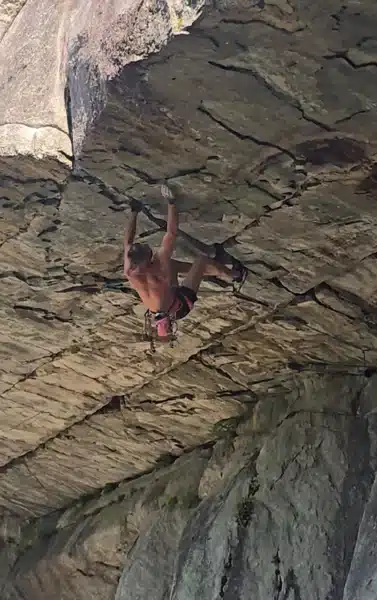
Shortly before his trip to Squamish, Kruder was battling a fever. Fortunately, it only lasted for a short time, so he was able to begin his journey. Having arrived in Canada, he feels well, but "physically not at his usual level," he writes. His original plan was to "Cobra Crack"A 45-meter-long 5.14b, which runs in a narrow crack on an overhanging granite wall. However, he had to abandon this goal because he injured his finger and his fingers couldn't fit into the crack. An alternative quickly emerged: The Shark. The route was climbed by Stu Smith opened and Connor Herson First ascent in 2024, directly followed by crack climbing legend Didier berthod.
Race against time
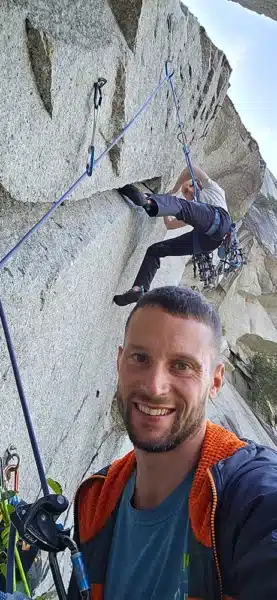
The Shark is merciless from the start: From the entry ledge, it transitions directly into technically complex moves on a corner, followed by a bouldering section that already demands a lot of strength, and the finger crack offers little opportunity to rest. It continues with roof climbing, hand clamps, and the crux of the route.
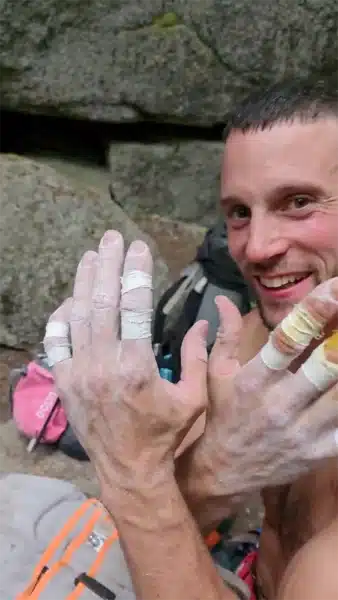
Kruder invested almost every remaining day in the project, continually refining his beta and battling injured fingers. Superglue for missing skin and tape were among his constant companions. Only on the very last day before his return flight did he manage to complete the climb with only six cams in place.
The second attempt was better—a tough battle, during which I had a moment of uncertainty and fell. I only had one more chance, and time was running out. After about a 20-minute break, I taped another bloody finger and started climbing.
Jernej Kruder
Kruder barely had time to clean the route before he had to catch his plane. Apparently, there are still a few multi-pitch routes in Squamish that have caught Kruder's attention, so we can probably expect him to return to Canada soon. For now, however, he's satisfied with the third ascent of "The Shark."
Jernej Kruder's competition successes
Before Jernej Kruder became known in the international climbing scene for his spectacular crack lines, he celebrated numerous successes in competitive climbing. In 2014, he became Vice World Champion in Bouldering and in the same year, he won the rock master in Arco. In 2018, he won his first Bouldering World Cup and also the overall World Cup in this discipline. In 2020, he became European Bouldering Champion in Moscow.
You might be interested in:
- 100-meter crack repeated for the first time: Jernej Kruder climbs Crown Royale (9a) trad
- Jernej Kruder successful on El Capitan
Credits: Images by Jernej Kruder