


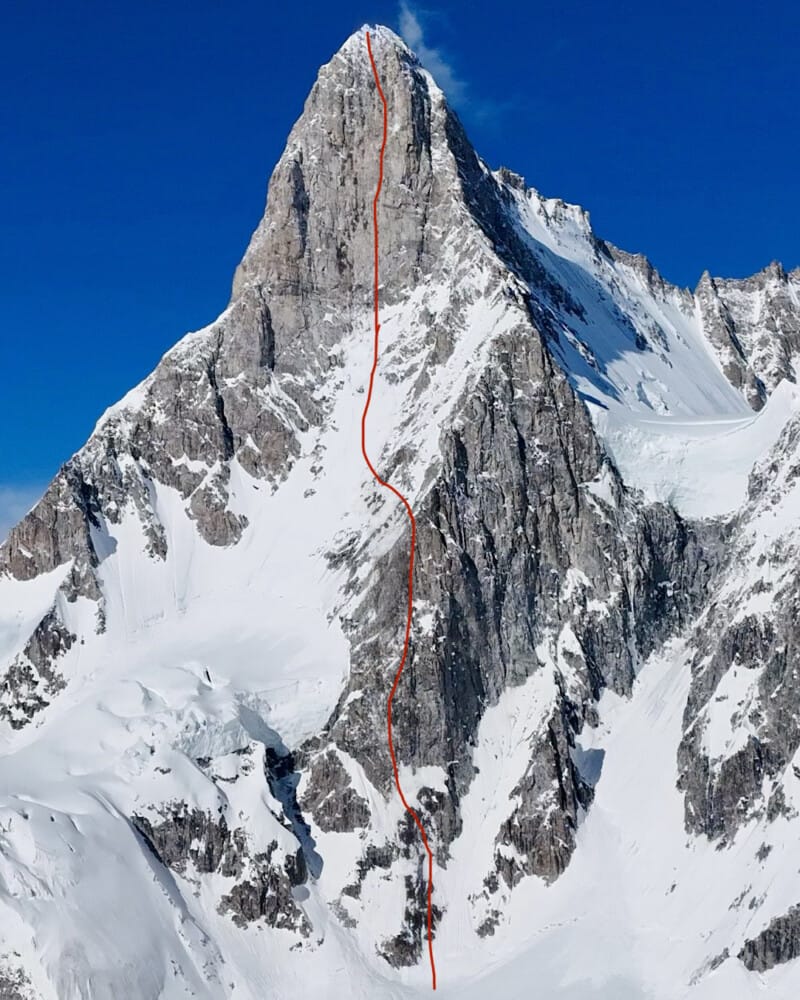
Siebe Vanhee, Sean Villanueva O'Driscoll, and Symon Welfringer have made the first ascent of the west face of Tahu Rutum, a 6.651-meter peak in the Pakistani Karakoram. Their 1500-meter route, "The Leopard of Higher Ground," connects the lower rock face to the summit via a series of steep snow traverses. They completed the route as a team free ascent, redpointing every pitch.
A wall with history
Tahu Rutum – also known locally as Taa Hurutum – rises near the Hispar Glacier and, with its Patagonian-like profile, is considered one of the most striking and inaccessible peaks in the Karakoram. The summit had only been reached once before: in 1977 by a Japanese expedition via the southwest ridge. The west face remains untouched.

For Siebe Vanhee, the story begins in 2014 with an encounter with Kyle Dempster. The American mountaineer, who disappeared in Pakistan in 2016, had attempted the west face solo in 2008. He spent 23 days on the wall, but had to turn back 200 meters below the summit. Since then, the wall has held Vanhee captive.
The “most ridiculous line”
In May 2026, the Belgian professional climber assembled a team: Symon Welfringer, Pete Whittaker, and Sean Villanueva O'Driscoll. On May 25th, the four traveled to the Karakoram, but at base camp, Whittaker contracted altitude sickness, forcing him to retreat. The remaining three climbers set off on June 15th.

Instead of the obvious glacier approach from the left, the trio chose the entry from the right: eight rope lengths of brittle rock, then steep snow traverses and arduous hauling before the main wall even began.
We chose the most ridiculous line, the one no mountaineer would choose.
Siebe Vanhee
“We chose the most ridiculous line, the kind no alpinist would choose,” said Vanhee. “Then we tackled it big wall style. I cursed a few times – why are we hauling in this terrain for ten days? But that’s what we do. It’s simply a big wall line at high altitude, and it paid off.”
Capsule-style above 6000 meters
Because the team wanted to free climb the wall, the three climbers opted for the "capsule style": portaledges, food, and equipment for up to 15 days were hauled up the mountain. This tactic allowed them to remain in position during unstable weather conditions and resume the climb as soon as the forecast improved.

It was my first time climbing big wall style in high mountains. It was an enriching experience to see how we combined alpine terrain and big wall style.
Symon Welringer
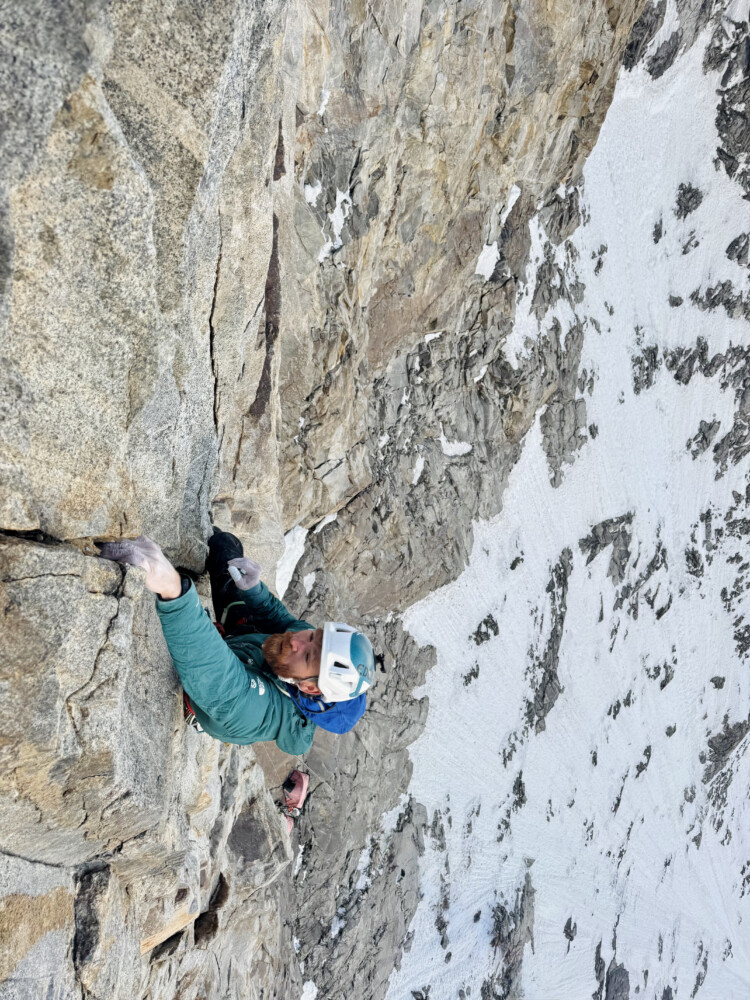
On day 11, the fourth camp was set up at 6260 meters at the foot of the main face. Day 12 brought the crux: steep, overhanging terrain above 6000 meters, with difficulties up to 7b. For the team, it was the highlight of the expedition. On June 27, Vanhee, Villanueva O'Driscoll, and Welfringer reached the summit in clear visibility – after seven days without a rest day.

Besides the summit moment, the team particularly remembers the hauling incident: A bag got stuck, and Vanhee lowered himself to free it. "Suddenly, the haul rope snapped on a sharp edge," recounts Villanueva O'Driscoll. "Siebe somehow managed to catch the bag before it fell. Had it gone, the climb would have been over."
The Leopard of Higher Ground
"The Leopard of Higher Ground" combines two references: Taa Hurutum means "home of the snow leopard" in the local language. Higher Ground Coffee was the name of the café that Kyle Dempster ran in Salt Lake City. The team's route intersected Dempster's 2008 attempt and located three of his old spots.
To the team's knowledge, this is only the second ascent of Tahu Rutum ever – and the first since 1977.
The facts about the line
- Mountain: Tahu Rutum / Taa Hurutum, 6651 m, Karakoram, Pakistan
- Route: The Leopard of Higher Ground, 1500 m, west face
- Difficulty: up to 7b, all pitches free climbed
- Length: 20 rope lengths (8 lower wall, 12 upper wall, with approximately 600 m of snow traverse in between)
- Summit: June 27, 2026 | 15 days on the wall including 2 days descent
- Team: Siebe Vanhee, Sean Villanueva O'Driscoll, Symon Welfringer
That might interest you
- "South African in a Day": Siebe Vanhee & Tommy Caldwell make climbing history in Patagonia
- Siebe Vanhee climbs difficult Eiger North Face route Odyssey in one day
+ + +