


A single sprint to escape through deep snow depletes chamois or ibex of reserves that cannot be replenished in the middle of winter. Wildlife sanctuaries in the Alps are designed to prevent this, so you should know these rules.
The Alps are a captivating natural and recreational area, attracting countless outdoor enthusiasts year-round. What is a place of relaxation and mountain sports for people is simply the natural habitat for native wildlife. To protect these sensitive animals from persistent stress and to safeguard the ecological balance, special wildlife sanctuaries have been established in the Alps. Understanding this natural refuge is crucial for the long-term preservation of alpine flora and fauna.
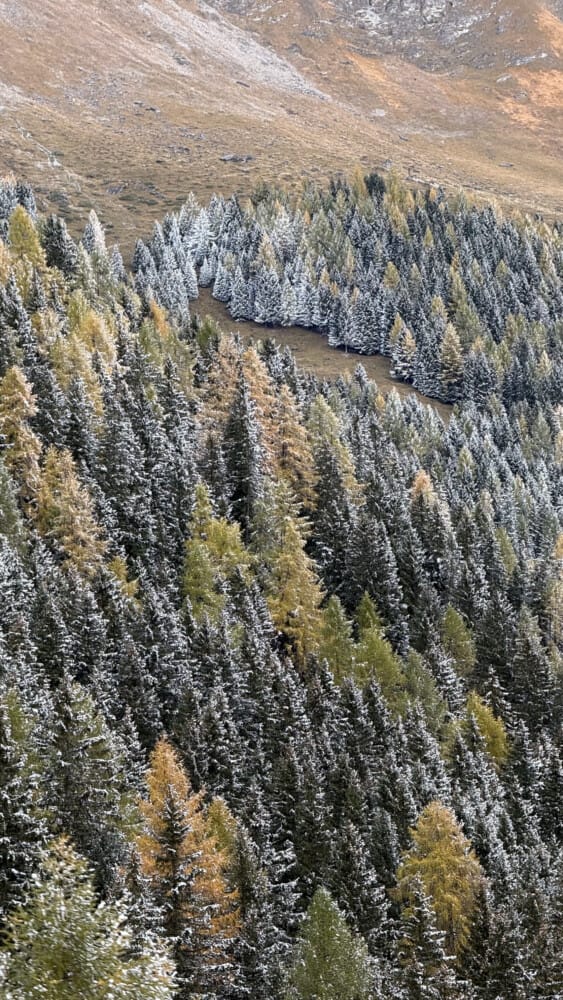

Left: A wooded area is home to many different animal species that need rest and shelter in winter | Image: Vivalpin; Right: An ibex in the Alps | Image: Adobe Stock
Between ban on entry and personal responsibility
Wildlife sanctuaries are designated protected areas in alpine regions where the undisturbed survival of wild animals is the top priority. Depending on the region and legal basis, a distinction is made between legally established protected areas with binding access restrictions outside of marked trails and voluntary conservation areas. The latter rely primarily on the understanding and personal responsibility of mountaineers and are often established by alpine clubs, forestry authorities, and nature conservation organizations. The common goal of both concepts is to minimize human disturbance so that animals can rest, feed, and raise their young undisturbed.
Wildlife sanctuaries in the Alps: three countries, three sets of rules
These protected zones extend across the entire Alpine arc, though their precise designation and legal framework vary from country to country. Switzerland has comprehensive legal wildlife resting zones and hunting reserves, the boundaries of which can be viewed transparently via geoportals such as wildruhezonen.ch. In Germany, particularly in the Bavarian Alps, forest and wildlife conservation areas, established as part of initiatives for environmentally responsible mountain sports, are the dominant feature. Austria, on the other hand, relies on a system of wildlife resting zones, hunting exclusion zones, and quiet zones, the regulations of which are enshrined in the respective nature conservation and hunting laws of the federal states. These zones are typically located at forest edges, on densely vegetated steep slopes, on snow-free sunny sides, and in inaccessible mountain pine thickets and high-altitude areas where shy species such as chamois, ibex, and grouse seek refuge.
Survival on a shoestring budget
Especially during the harsh winter months, maintaining these protected areas is crucial for the animals' survival. While food is plentiful in summer, extreme scarcity prevails in the high mountains during winter. To withstand the freezing temperatures and limited food supply, alpine wildlife has developed remarkable survival strategies. They lower their heart rate and body temperature, reduce all movement to a minimum, and largely rely on their fat reserves.
Every escape sprint drains the reserves.
If these vulnerable animals are disturbed by winter sports enthusiasts such as ski tourers or snowshoe hikers, they instantly panic. A single escape sprint in deep snow depletes valuable energy reserves that cannot be replenished in the middle of winter. Frequent disturbances therefore inevitably lead to exhaustion, weakness, or even freezing to death. Furthermore, the additional stress causes the weakened wild animals to eat more young tree shoots, resulting in severe browsing damage in the protective forest and permanently impairing its vital protective function against avalanches and mudslides. Offspring are also at risk, as stress-induced escapes in pregnant animals often lead to miscarriages.

Consideration begins at the desk
To prevent conflicts of interest between hikers, conservationists, wildlife, hunters, and foresters, foresight and mutual understanding are essential. Conflicts rarely stem from malicious intent, but mostly from a lack of knowledge. Careful tour planning is therefore the foundation for environmentally responsible mountaineering. With the help of modern digital map platforms and apps from alpine clubs, designated protected areas can be identified in advance, and routes can be planned in such a way that sensitive slopes or feeding stations are not even touched.
Staying on track
In the field itself, the basic rule is to always stay on marked trails and established standard routes. Wild animals become accustomed over time to repetitive movements on fixed paths, while unpredictable cross-country excursions immediately trigger flight reflexes. Likewise, tours at dusk or at night should be avoided, as animals prefer to forage during these hours. Anyone accompanied by a dog should keep it on a leash at all times, as wild animals instinctively perceive unleashed dogs as predators.

Peace as a shared task
Respectful interaction ultimately requires athletes to accept the limits of nature, while hunters, foresters, and tourism associations make a valuable contribution to peaceful coexistence through clear visitor guidance signage and educational initiatives. If respect and prudence guide actions in the mountains, the fascination of the Alps remains accessible to people without wildlife having to pay the price.
That might interest you
- When mountaineering loses its foundation
- More than ever before: Alpine Club awards nine huts with environmental quality seal
+ + +
Credits Cover image: Adobe Stock #644376206
About the author: Max Pohl