


Five days, two climbers, one ambitious goal: the free ascent of Joy Division on the Torrione Qualido in the Italian Val di Mello.
Jonas Schild and Thomas Schmid had long planned to tackle a joint tour. At the beginning of June, they set off for Val di Mello, Italy, to free climb the 800-meter-high Joy Division line (8b max.) on Torrione Qualido. With 20 pitches, it is one of the most demanding multi-pitch routes in Europe and offers a fascinating challenge comparable to the legendary El Capitan.
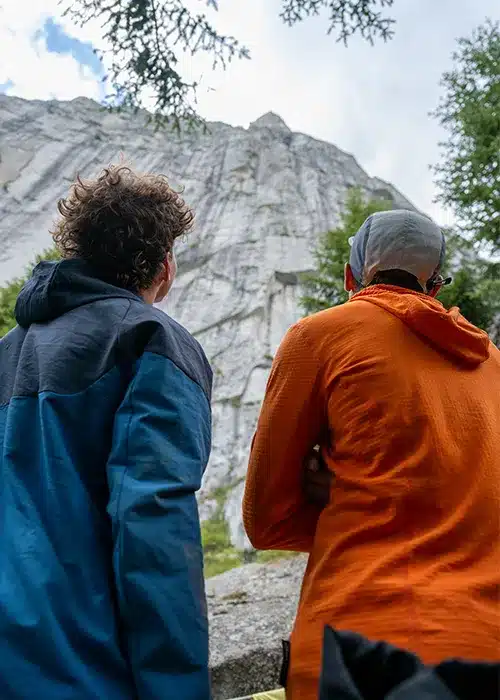
Joy Division is a combination of three existing lines, first climbed in 2004 by local climbing legend Simone Pedeferri – but in several stages on different days. Only a few continuous ascents are known from the last 20 years, such as the one by James Pearson or Babsi Zangerl and Jacopo Larcher.
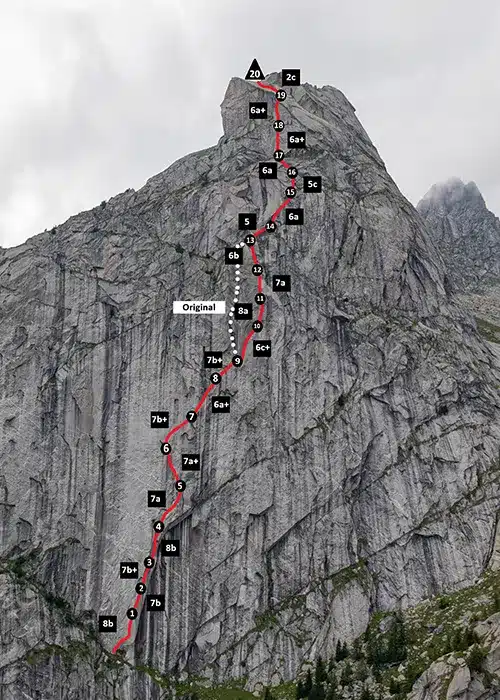
Entry via a key length: Project start Joy Division
The route begins directly with the most difficult pitch (8b). Since the wall was still largely wet at the start of the tour, Schmid and Schild used the first day to thoroughly check out this entry pitch. The bouldering sections, in particular, proved to be technically demanding and complex.
In the following days, the two concentrated on the lower pitches – and encountered difficult conditions: The wall is completely exposed to the sun until shortly after 14 p.m. This made challenging climbing at midday almost impossible.
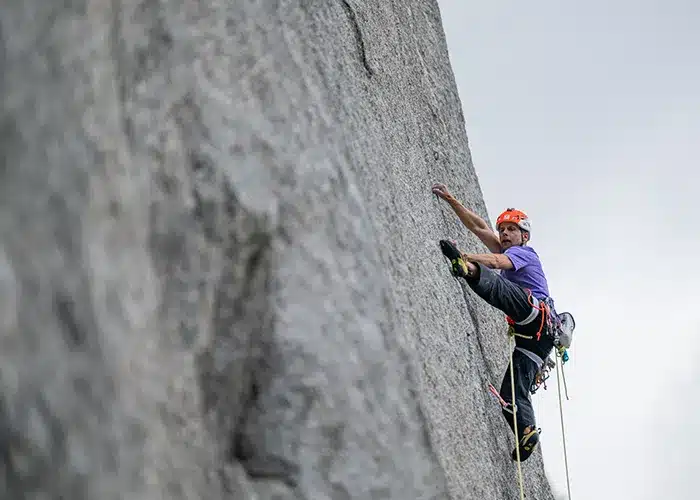
It quickly became clear that climbing the route in one day was not realistic. The combination of the wall height, heat stress, and continuous difficulty required a tactical reorientation. After a rest day in the valley and the organization of a portaledge, the new plan was finalized: a two-day ascent – with a bivouac on the wall. The goal was to use the cool morning hours for climbing, take a break in the portaledge at midday, and continue climbing into the evening.
Early start to the free climbing attempt
On June 12, Jonas Schild and Thomas Schmid began their free climbing attempt. To make the most of the cool morning hours, they began their ascent before 7 a.m. Schild successfully completed the crux, the 8b entry pitch, on his first attempt.
Delicate foot changes, thumb rests, and always balancing between standing fully on my feet and still supporting a little weight with my fingers to prevent my foot from slipping. To my complete amazement, I manage this part relatively easily.
Jonas shield
Schild describes the ascent of the first pitch as a mixture of "not fully awake and complete focus" – amazed at how easily he managed the most difficult part of the route. Thomas Schmid fell on the same pitch and subsequently abandoned a second attempt. Instead, he prioritized the team goal. From this point on, the two adhered to a previously agreed-upon tactic: all pitches 8a and above are climbed by both of them in lead, and below that, they alternate. Each pitch must also be climbed in follower mode without using a rope and without falling.
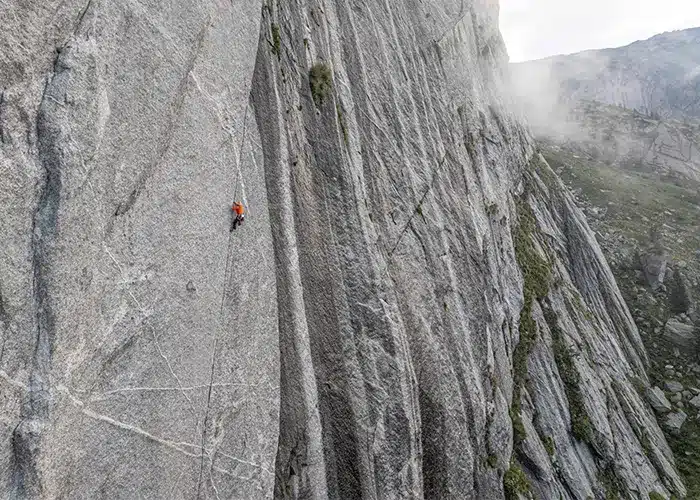
The next two 7b/7b+ pitches are truly challenging. We've only climbed them once before, and both are quite challenging for their grade.
Jonas shield
The two took a siesta before the fourth pitch. "The wait is brutal, since there are still 17 pitches to go, and 11 of them are unknown," said Jonas Schild. When the shadows began to fall, Schild concentrated on the next 8b pitch, but a small mistake led to a fall. Schmid then took over the lead – still motivated despite the fall on the first pitch. "That was extremely helpful for me. It allowed us to enjoy the time in a relaxed atmosphere despite the pressure," adds Schild. On Jonas's second attempt, everything went well, and the two most difficult pitches were completed.
Pitches 7a, 7a+, and 7b+ followed. Despite the seemingly moderate grade, full concentration was required – slabby, boulder-heavy terrain where a single slipping foot could mean a fall. They reached the belay point of the seventh pitch without any mistakes and settled into their portaledge for the night.
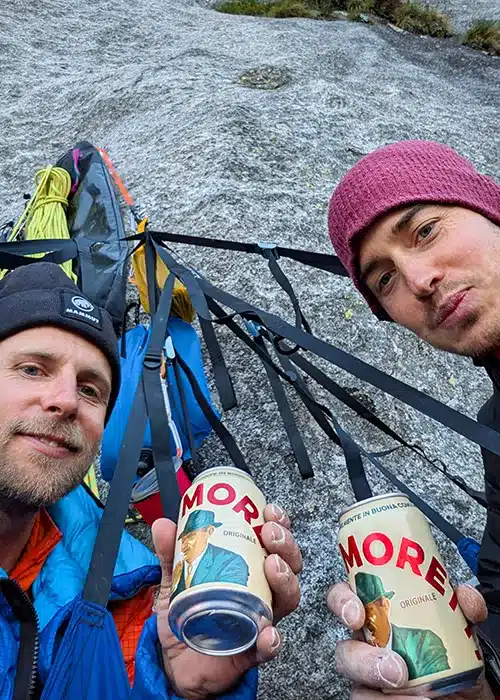
A decisive day in the upper part of the wall
On the second day of their free climbing attempt, the two decide to use an alternative route (Con un piede in paradiso) – on the recommendation of Babsi Zangerl and Jacopo LarcherThis variant is considered more technically challenging, although it also contains challenging passages. After a successful 7b+ traverse and a few more pitches, the final major hurdle awaited: a tough 8a – slabby at the bottom, with an overhanging crack at the top.
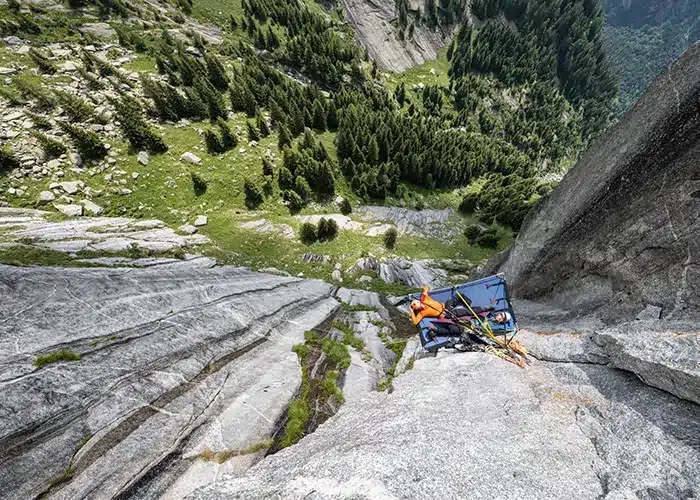
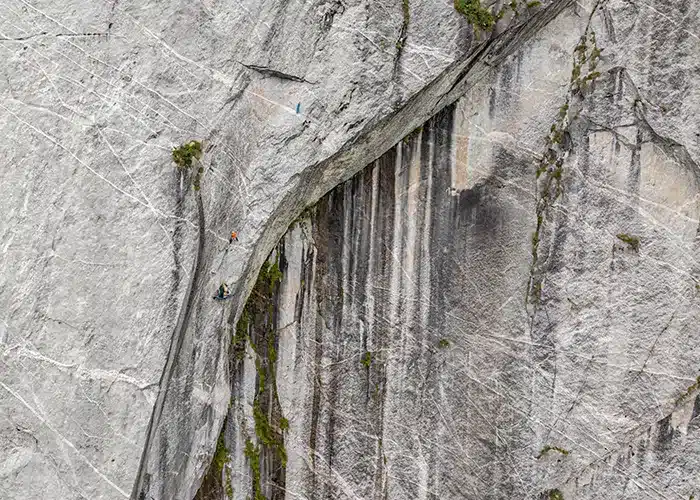
Once again, the strong sun forced the two to take a siesta in the portaledge. While waiting, Schild experienced a mental low point, followed by a clear, motivating message from Thomas:
Now you climb this pitch, and then we'll get through. I didn't support you for two days just so you could screw it up here because of an 8a pitch.
Thomas Schmidt
No sooner said than done. On his second attempt, Schild completed the pitch without any faults, and the goal of a completely free ascent was within reach.
Summit success in the evening and descent into the night
Despite the approaching thunderstorm, Schild and Schmid decided to continue the ascent. After a technically demanding 7a and two alpine pitches, they reached the traverse to the Melat route. From there, they climbed four moderate pitches to the summit, which they reached at 21 p.m. – exhausted but overjoyed.
After a hug and a short break, we soon began abseiling into the night.
Jonas shield
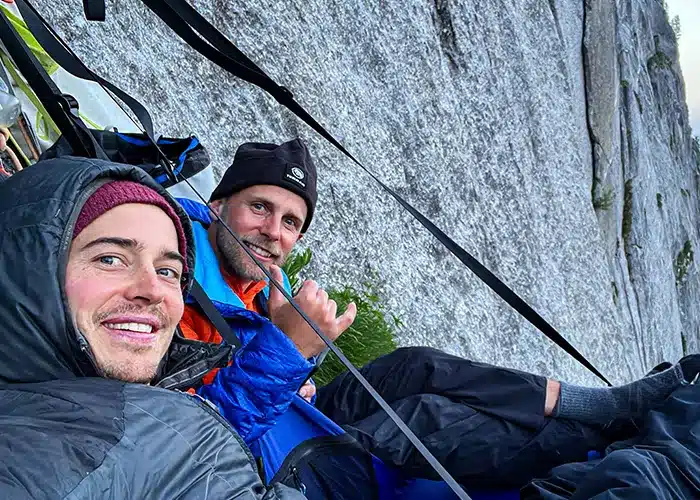
After a short break and a hug, they began their nighttime abseil. They spent the night in the portaledge they had previously left behind before finally abseiling down the wall the next morning. In total, the two spent five days on the route.
This experience was one of the most formative of my climbing career. The combination of intense climbing moments over so many pitches in a breathtaking landscape and the necessary teamwork made this experience unique.
Jonas shield
You might be interested in: