


Finger strength like Will Bosi, power like Erin McNeice: What are the ideal conditions for climbing? Lattice Training has tried to "build" the perfect climber's body.
When asked about their personal "weak spot," every climber probably has an answer ready. Now it's time to put an end to speculation and half-knowledge: Lattice training has developed various standards for the ideal climbing body – for finger strength, upper and lower body, but also for the head.
Finger strength standards
If someone is known for exceptionally strong fingers, it is Will BosiThe Scottish 9A boulderer takes a rather conservative approach to finger training – by professional standards: "More additional weight doesn't mean more effect."
If I can hang from a bar with one arm and 10 kg of additional weight, I have achieved my maximum training effect for this grip.
Will Bosi
When it comes to the gold standard for finger strength for ordinary climbers, Lattice Training sticks to its own data from their training system: Men should be accompanied by 100% body weight 5 seconds one-armed on one of the hangboard bars can hang – the same standard applies to women at 95% body weight.
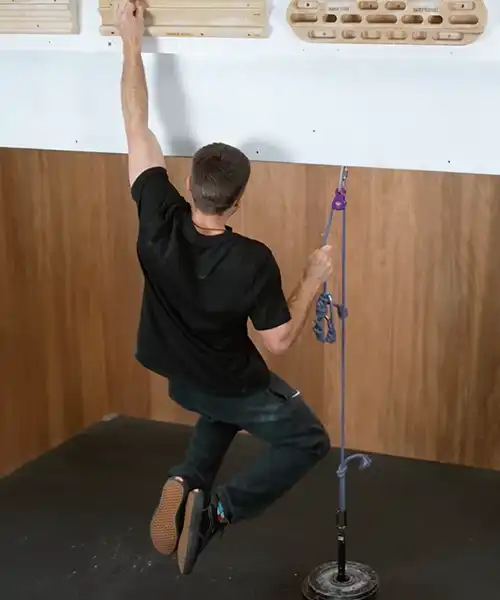
The challenge when it comes to finger strength is staying injury-free. To achieve this, the experts at Lattice recommend incorporating as many different grip types and positions as possible into your regular training – and not overdoing it.
Forearms: Endurance Standards
Our forearms ensure that we don't fall off the wall at the first sign of fatigue on climbing routes or longer bouldering routes. Professionals like Erin McNeice Therefore, they train their general forearm fitness for about 30 hours a week – hardly realistic for recreational athletes.
Tips from Lattice coach Ollie Torr: Long warm-ups on easy routes provide more climbing meters in the session, which trains endurance. Those who want can also train again at home or on the go with special Training tools increase. Important: Endurance training does not have to last all year round – the winter months in particular are ideal for phases with higher climbing volume.

Upper Body: Power Standards
Power is essential—and yet the majority of climbers never achieve standards like one-arm pull-ups or bench presses with astronomical weights. Lattice Training's pull-up benchmarks: 2 pull-ups with 165% body weight for men and 135% body weight for women.
Beyond these limits, the performance effects decrease again.
Lattice coach Ollie Torr
Other important upper body exercises & benchmarks:
- Wide pull-ups
- External shoulder rotation with dumbbell (5 repetitions with 15 kg for men, 10 kg for women)
- Bench press (1-2 repetitions with 100% body weight for men, 75% for women)
Lower Body: Mobility Standards
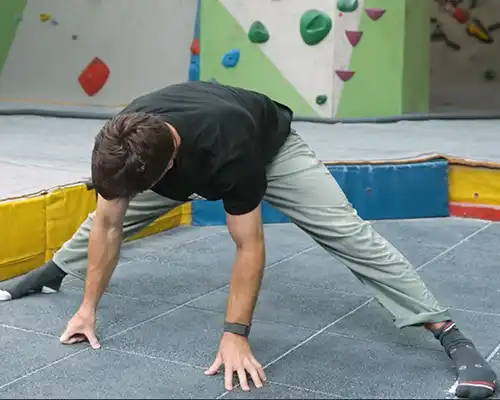
Even though the lower body is often forgotten, its role should not be underestimated. Extremely agile climbers like Adam Ondra demonstrate the importance of active and passive mobility in climbing. The standard for hip mobility is the Box split: Whoever here Legs frontally as far apart as your own body height, passed the mobility check with flying colors.
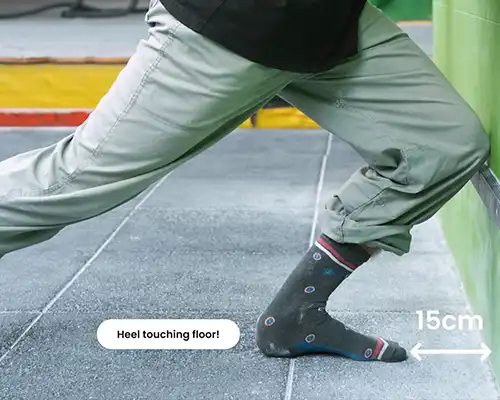
Another important point: the Flexibility in the ankleIt allows us to lower our heels far when climbing, allowing us to stay under the handhold or stand on sloping surfaces. This form of mobility can also be trained with targeted exercises.
Mindset & Technology
The mind is also often underestimated, says Ollie Torr of Lattice. The most important factors for an ideal climbing mindset: ability to concentrate and How to deal with frustration and fear of failureThis applies to everyone who climbs to their own limits – whether they are professionals or ambitious amateur athletes.
Tips for a fitter mind when climbing & bouldering:
- Actively regulate breathing for better concentration
- Brush handles before each attempt as a ritual for focus
- When frustrated: focus on the learning effect, not on failure
This is what the perfect climber would look like
Ultimately, every body is different and every climber must find an individual way to work ideally with the given conditions.
But does the perfect climber really exist? According to Ollie Torr, (surprise) Janja Garnbret closest to this ideal so far – and even the strong Slovenian isn't perfect. So there's hope for ordinary mortals who simply want to get closer to their own ideal. And that's what climbing is all about, after all.
In the video from Lattice Training you can see all the exercises and tips for you to follow.
That might interest you
- Finger strength: Training exercises and methods in the ranking
- You can implement these training tips from Erin McNeice in your next bouldering session
+ + +
Credits cover photo: Lattice training